Thursday, April 21, 2016

Micro-History: A Little Closer to the Story


This past fall I was introduced to a genre of history that I had not come into contact before or if I had I did not realizes it.  Micro-history! Micro-history is usually an account of a person, a small group of people or a small event from the past.  The key word is small, it’s like looking at history through a microscope, examining how one community lived amidst of a larger event.  For an example looking at how a slave in Lynchburg survived the civil war.  I was given to read two micro-histories during my first semester at grad-school, The Worms and the Cheese by Carlo Ginzburg, a story of a 16th century heretic who was burned at the stack for heresy against the orthodox teachings of the Catholic Church.  The other book was A Midwife’s Tale: The Life of Martha Ballard Based on Her Diary 1785-1812 (a better book than the title might imply) by Laurel Thatcher Ulrich, an account of a New England community based on a Midwife’s diary.

I found that I enjoyed this genre of history a great deal, it reminded me of why I love history so much.  It’s all in the story.  What micro-history does very well, is that it takes a large concept like the Reformation, American Civil War or World War Two and looks at a small piece of it.  Showing that these larger concepts are not as monolithic as a survey class may imply. Micro-history also brings history down to an eye level, it makes history more human.  Reminding readers that history is little more than the memories of people.  It looks at ordinary people who lived through extraordinary times and tries to examine their thoughts.

Micro-history offers an alternate perspective that history often glazes over.  It allows a peek at people like Mennochio from The Cheese and the Worms who would not otherwise get a spot in a history book and yet were significant to a larger story.  A historian may use a piece of evidence such as court transcripts as a source to make a larger point and miss the cultural, social, and political significance of the particular event.  I decided after reading The Cheese and the Worms that I would use it if I ever taught a Reformation or Church history.  It is easy skim over everyday people during The Reformation.  Typically when a student is introduced to The Reformation they are shown Luther, Calvin, Protestant Martyrs, and the Religious wars.  People who are larger than life and events that were huge in scope.  “Microhistory acknowledges different perspectives in the larger narrative.” [1]

As interesting a discipline as micro-history is there are some drawbacks to the historian, “such as lack of debate from other historians, making a smaller point and then projecting it on a larger issue.” [1] A problem with microhistory is that typically there is not a lot of scholars that study the same single life or small event, so it is harder to find challenges and debates about the micro-historian’s points.  “Debating and questioning one’s understanding of the facts is essential to maintain a high level of historical excellence.”  Another problem with micro-history is that often it lacks the context that larger scoped histories have.  It also may be tempting for someone who reads a micro-history like A Midwife’s Tale and then assume that every village in colonial America is exactly the same. “One needs an understanding of the culture around the narrative to understand the significance of the situation.”[1]

Despite these drawbacks to micro-histories, I greatly enjoy them and believe they are very helpful to the larger picture as well as the small.  In every history class the question always plagues history teachers, “what should I keep and would should I leave out?” Micro-history allows historians to look a little bit closer and keep a little more of the story.


[1] Keating, Christopher. "Reaction Paper Week 10." JMU Class Hist 671 (November 2015): 1-2.

Bibliography for works mentioned:

Ginzburg, Carlo. The Cheese and the Worms: The Cosmos of a Sixteenth-Century Miller. Trans. John and Anne Tedeschi. Middlesex, England: Penguin Books, 1985.

Ulrich, Laurel Thatcher. A Midwife’s Tale: The Life of Martha Ballard, Based on Her Diary 1785-1812. New York: Vintage Books, 1990.


Thursday, February 18, 2016

The Great War


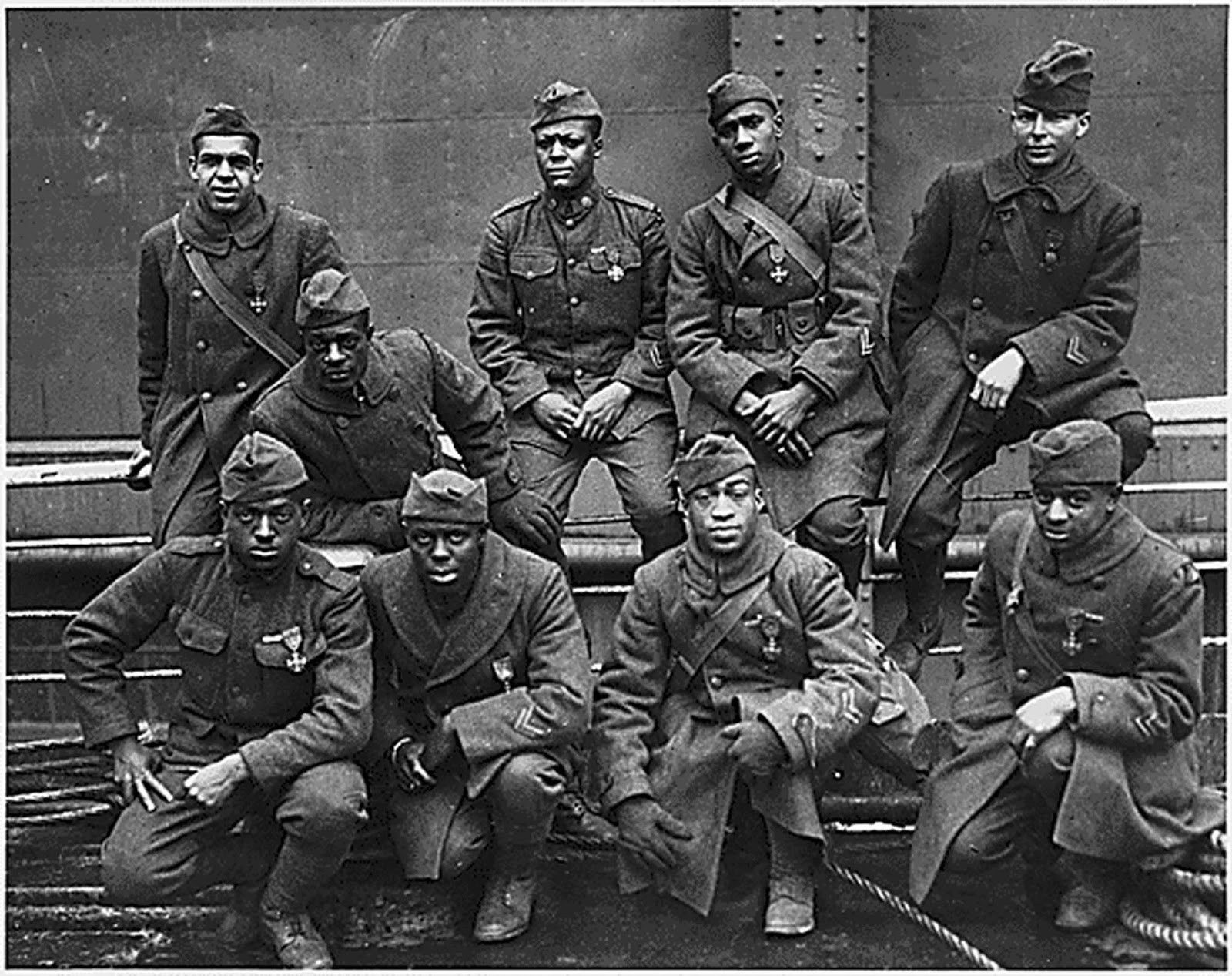
100 hundred years ago the world witnessed a war so horrific, so widespread that they called it “the War to end all wars” or simply the Great War.  With the anniversary of the United States participation in World War 1 coming up next year I would encourage you all to visit a museum explaining the war and America’s part in it.

9th Machine Gun Battalion
 Most Americans were opposed to entering the European war, so much so that Woodrow Wilson won his second term in office under the idea that “the president kept us out of war.”[3] January 19, 1917 the British presented America a telegram that had been sent from Germany to Mexico proposing an alliance.  Between this revelation and the unrestricted submarine warfare conducted by Germany against all shipping between America and Britain, the pacifism was turning to a demand for war. On February 3rd, the American grain ship, Housatonic, was sunk and three weeks later a British liner was sunk killing four Americans. Two months later on April 6th the United States declared war on Germany. [2]

369th Infantry
4,000,000 military personnel mobilized during WW1.  The Argonne-Meuse Offensive, starting on September 26, 1918 was the largest battle that US troops participated in during the war. [1] Approximately 1.2 million American troops fought from September to November by the end 26, 277 American soldiers had died in the battle. [2]

On October 4th Wilson received a message from Germany to conduct peace talks according to his 14 points.  The war ended on November 11, 1918. [2]

The list provided is just a small sampling of museums around the country. Take a road trip to one of these or find one closer to you. WW1 should not be forgotten. Find a Museum or exhibit that honors the sacrifice of the 50,000 men killed and an additional 230,000 wounded. [2]


The National WWI Museum and Memorial in Kansas City, MO https://www.theworldwar.org

Woodrow Wilson Presidential Library in Staunton, VA http://www.woodrowwilson.org

Kemper Art Museum in St. Louis, MO http://www.kemperartmuseum.wustl.edu/WWI

The Museum of Flight in Seattle, WA https://www.museumofflight.org/WWI

American Armored Foundation Tank Museum in Danville, VA http://www.aaftankmuseum.com/

Pritzker Military Museum and Library in Chicago, Ill http://www.pritzkermilitary.org/


Bibliography

[1] Paul S. Boyer, Clifford E. Clark, Jr., Joseph F. Kett Neal Salisbury, Harvard Sitkoff, Nancy Woloch, Enduring Vision: A History of the American People Sixth ed. (Boston, MA: Houghton Mifflin Company, 2009), 700-701.

[2] H.P. Willmott, World War I (New York: DK Publishing, 2009), 196, 264-265, 307.

[3] A. Scott Berg, Wilson (New York: G. P. Putnam’s Sons, 2013), 410-411.

Image C. http://www.learnnc.org/lp/editions/ww1posters/5041

Image D. http://www.learnnc.org/lp/editions/ww1posters/5041


Tuesday, February 2, 2016

Sitka and the Benefits of Historical Fiction


Image 1
I confess I had not paid much attention to the purchase of Alaska in my studies until I read Sitka.  Sitka is a fine historical fiction from Louis L’Amour about a young American man who smuggles furs from Alaska to San Francisco while it was still part of the Russian Empire. I was so foggy on the facts about this episode in American history that Mr. L’Amour could have put anything he wanted in his book and I would not have noticed the historical inaccuracies.  That is the dark side of historical fiction.  However the benefit of books like this is that it can make students curious.

I ended up looking up not only when did Alaska get purchased by the United States but also it made me curious about other Russian colonies in the Americas.  I also had to look up what a Porter Percussion Turret Rifle was.  It was an early repeating rifle design that used a revolving wheel to store the bullets. This proved to be a poor design because one chamber would always be pointed at the shooter and if something set that cartridge off it could kill you. It proved to be not a very popular weapon, go figure). [1] This is the benefit of historical fiction, it gets the student curious to look up some of these details, to see what really happened. And it reminds old students like me, there is always something else to look at in history.
Image 2
             I sometimes get pretty uppity about how much I know about American history, and then I talk to some of my friends or read a book (like this one) and I just want to cry, “WHAT HAVE I BEEN DOING WITH MY LIFE!”  This book made me curious about Russian America or Alaska during the mid-19th century which is what a historical fiction is supposed to do. It was a good adventure and a good reminder of why I love history so much.

Image 3


Image 1: personal collection


Thursday, January 21, 2016

Poplar Forest: In Winter or Summer


Image 1: Personal Photo
I just visited Thomas Jefferson’s retreat home, Poplar Forest. This is not the first time I have visited this historical site, I took my future wife there for one of our first dates. I have deep fondness for this location. Furthermore it has some fantastic exhibits to offer despite its relative small appearance.  When you drive up to the home you are greeted by a group of buildings there is the house itself, smaller than Monticello, but exhibiting similar Jeffersonian characteristics. There is the admissions and gift shop, a small classroom, where tours gather to go to the house. Finally the archeology exhibit, displaying artifacts found from digs on the property.  Three things the museum does very well are the house tour, the enslavement community tour, and its winter program called Winter Reflections Weekends.

I have gone through many presidential house tours but Poplar Forest is the most fun I have ever had in a president’s house.  This partly because of the shape of the house, Poplar Forest is an octagon. No other building quite captures Jefferson’s genius for architecture than Poplar Forest.  You enter into the front door and going through the entire house.  The most unique quality of the house is that it is not finished.  Historians and master builders are attempting to restore the house using the plans and tools of Jefferson’s era and in some cases using wood from the property itself.  After seeing the beautiful semi-finished product in the first half of the house, you are escorted into the second half.  The second half has been left to mostly unrestored for educational purposes and this is the most interesting part of the tour. You get to see behind the plaster and discover some of the building practices of the early 19th century.
Image 2: jeffersonia.wordpress.com

The second program at Poplar Forest that I enjoyed greatly was the Enslavement Community Tour. A tour that explores the lives of the enslaved peoples that lived and worked on Poplar Forest. This is not a unique program, similar tours are offered at Monticello, Montpellier and Mt. Vernon. I confess this was the first Enslavement Community Tour I have ever gone on, but from my limited experience Poplar Forest does a good job of introducing the guests to the lives of these enslaved people. One could tell that the museum had done a great deal of research providing their guests with names of these people and not merely saying “there would have been a cook here and a stable boy there.”  The tour shows their guests locations that the slaves would have worked and artifacts that the slaves would have used.  Poplar Forest does not shy away from the controversial nature of slavery and that one of Virginia’s most famous figures practiced it, instead they welcome the discussion, an important attitude to have for any historian and historical site. The Enslavement Community Tour is new to Poplar Forest only being developed last spring, but it is well conceived.

The last program to mention in this blog is their Winter Weekends. Poplar Forest is closed for the winter except on the weekends.  As opposed to the regular tours of the house where a docent walks the group through each room of the house, Winter Weekends offers a semi-self-guided experience.  There are two docents in the house to answer questions but the guest may browse the many plaques and exhibits. One of the best things about this program is the hands on experience this program offers. In the parlor the southernmost room of the house one can lounge in a Campeachy chair or play a game of chess. My day was made when I was able to dawn a pair of white gloves and actually touch some two hundred year old books.

Poplar Forest is one of my favorite historical sites not only because of my personal experiences but because of the many opportunities for historical discovery. I would recommend it to schools as a great location for a field trip or for a young family to spend a day trip in winter or summer.
                                              http://www.poplarforest.org/

Image 3: http://www.tripadvisor.com


 Other Presidential homes in Virginia:

George Washington’s http://www.mountvernon.org/

Thomas Jefferson’s https://www.monticello.org/

James Madison’s https://montpelier.org/

James Monroe’s http://ashlawnhighland.org/

Woodrow Wilson’s Birthplace http://www.woodrowwilson.org/


Friday, December 18, 2015

Global and World History: Is There A Difference?


Fig. [3]

          There is a growing trend in Academia and that is the discussion of global history.  Global History is a fascinating and exciting field but it does have a few draw backs.  You may recall a world history class in high school or maybe one in college.  If you were like me in undergrad I took two American history courses and two Western Civilization classes.  Global history is slightly different than world history.  World History does not quite work the same way. 


World history gives a couple of misleading impressions, first for the American students it tends to make them think that main division between studies is American history and world history making American history sound more important than it is.  Now don’t get me wrong I am an Americanist and enjoy American history more than any other regional study that History has to offer.  However, one does have to acknowledge that there are older civilizations than that of the United States.  A global perspective tries to put the history of the United States in the context of the rest of the world.  World history gives the impression to be monolithic. It shows that civilizations rise and fall without much connection of one to another.  “Global history is superior in this sense because it recognizes that civilizations are not static, they fight each other, trade with each other, convert each other and infect each other.”[1] Global history can use a number of approaches in its study, Social history, Military history, economic history, intellectual history and of course Cultural history.  It allows historians to see the big picture, how different civilizations have interacted and how ideas, like Industrialization and Globalization, go from Europe to Asia and vice versa. Large complicated narratives can streamlined and studied as a big picture history.

Global history is a useful tool to historians but, just like anything else, there is a tradeoff. Some of the challenges for a historian using Global History is that it streamlines those large historical questions but, it can lose some of the intricacies of the argument.  Smaller details can be lost, Global history is not as good at looking at smaller stories. The type of stories better told trough micro-histories and biographies. Cultural history can be done but it is hard to do a global-cultural history because one must be an expert in so many different cultures in order to see them interact it becomes too general. [2] 
Fig [4]

If you are interested in reading any global histories, The World History Association offers recommended reading list.  Here is the link: 


[1] Keating, Christopher. “Final Essay World History Class.” 12/11/2015.

[2] Keating, Christopher. “Hist 671 Global History Response Essay.” 11/9/2015.


Monday, December 14, 2015

Pop History vs Academic History


This past semester I started my first semester of Master’s work at James Madison University for the Pubic History program.  It has been quite a learning experience.  One of the first things that surprised me was that some of my professors and fellow students did not like what is called Pop history.  Pop history are those history books that you pick up at the local book store that are meant for mass production sale but may or may not be written by a trained historians.  Pop histories have had something of a bad reputation for quite a while for a number of reasons, some are poorly researched, filled with extravagant and unsubstantiated claims, and generally filled with oversimplifications or wrong information. Lauren Wheeler, A public historian, does a great job summarizing what is wrong with pop history in her blog.

 ”Pop history is analogous to pop music – it is light and easy to access and digest but without much substance.  It can also be seen as the tabloids of history in the tendency toward sensationalizing over accuracy and use of outdated or disproven information.  Most pop history is encountered in television programming – the recent series “Viking” is an excellent example – and distorts fact for entertainment value without providing the viewer with a disclaimer.  As a result when the general public watches pop history programs they leave with misconceptions of what happened and unwittingly perpetuate false information and assumptions about the past. “ (http://canenvirorock.com/2013/04/16/public-history-pop-history-academia-and-jobs/)

There are issues with pop history that must be said however, there are good popular histories out there and I for one love a good pop history.  They are usually well written, can be very interesting and be a great resource for someone who would never ordinarily pick up a history book and read.  It is for this reason I like pop histories! Anything that takes history and puts it from the “that was boring in high school” to “that is really interesting! I never knew that before!” category gets my vote.  That being said there are dangers to pop history.  https://www.youtube.com/watch?v=uhiCFdWeQfA

One of the dangers of pop histories or any kind of history is that some people tend to read one book and take it all as gospel truth, this can be said of academic histories as well.  If someone picks up an academic history they are also tempted to say “see here is an expert” and decide this is what really happened based solely on one book.  One of my pet peeves is sitting down with someone and having a conversations about history and they tell me exactly how it was based on “this one book” they read.  This is not entirely the average history student or history buff’s fault since historians and tour guides are trained to tell their narrative from a conclusive perspective. 

I believe in absolute truth. I am a Christian, my undergrad in history was done at Liberty University where I was very much trained in a modernist philosophy, that is that what happened in the past actually happened in the past.  However as a historian one has to realize that we don’t have every detail of every fact.  So there is room for what is called interpretation.  One historian will disagree with another historian, doesn’t mean that one historian is absolutely wrong and the other is absolutely right.  It just means that all historians are imperfect.  John Fea, of Messiah Collage, once wrote that “all history is revisionist history” it is true.  All historians have the responsibility to tell the truth of what happened in the past but just as when there are different perspectives in any story the same story can have different interpretations.  I would encourage everyone the next time they read the next best seller, most academic paper in the world, visit a museum or watch their favorite historical movie, to ask what perspective is being displayed and what is their evidence.


 [1] Fea, John. Why Study History?. Grand Rapids, MI :Baker Academic Group, 2013.


Friday, July 17, 2015

Here we go again!


Since graduating I have been wanting to do a post about the benefits of internships. When I was in school I heard multiple times from instructors that I should pursue an internship opportunity.  I did not follow their sage advise, there was always something else to do or some other responsibility. After graduating with a bachelors in history and not investing the time to seek out an internship I would like to encourage all history students out there to get an internship.  As the philosopher George Santayana said "Those who cannot remember the past are condemned to repeat it." Alright, that may a trite quote for a history blog however I would like others to learn from my mistake. I didn’t pay much attention to my short coming till after I graduated and by then it was too late.  Searching for a job definitely made me realize the necessity for history students to get internships or at least volunteer. It was volunteering at the National Civil War Chaplain’s Museum that helped me land a job at The Woodrow Wilson Presidential Library. Museums often have limited funds to hire employees, so they use volunteers and when a position does open up they typically hire from within a pool of candidates that they are familiar with i.e. those volunteers or those interns. Needless to say I was very blessed to receive a job in my field with the experience of an internship. Internships, even unpaid internships, are doorways into jobs.  This is especially true for workers in the history field.


I am also happy to announce my acceptance into the Public History program at James Madison University.  I am trying to prepare myself for a very busy year ahead of me.  I will be taking three classes (full time) participating in a teacher’s assistantship and continuing to work at the Woodrow Wilson Presidential Library on the weekends.  I am hoping a master’s in Public History will make me more desirable to employers in my field.  Here we go again!