History is rarely a strict chronicle of events, often it is a story woven into many other stories. This blog is the thoughts about History and Museum work, from a young historian.
Last time I explained that I had to retake the GRE and
shared some of my strategies for studying.
Well, my scores from my second attempt have just come in! I was told
that I should share them so you can make a comparison. So here the are!
Notice a great improvement in writing! Which was what I was
aiming for this go-round but I also an improvement in the Verbal
Reasoning portion as well. And miracle of miracles I didn’t lose any points in
the math portion. To be honest these scores are somewhat mediocre but GRE scores aren't the only thing grad schools are looking for. There not to bad.
Moral of the story is, study every day. It doesn’t have to be a lot, just thirty
minutes every day.
Since in my last post I explained my impressions of grad
school, I thought it would be appropriate to explain my experience with the GRE
in this post. For those who don’t know
the GRE stands for Graduate Records Examinations (it’s kind of like the SAT for
college grads who desire go for masters or PhD work). I took the GRE for the first time in January
2015. These are my actual scores.
(Don’t judge
me! I actually did make it into grad school. Granted it had very little to do
with these scores…) I really did get into grad school but it was on a probationary
basis, meaning I had to take the GRE again and bring up my writing scores. So
here are some of the things I learned while studying for the GRE both times.
The GRE is set up into three sections, Writing,
Vocabulary or reading comprehension, and quantitative (math ewwww!) The first part is the writing, you have to
analyze an issue and write a response in 30 minutes for the first essay and for
the second you must analyze and respond to an argument in 30 minutes. Here is an
example for one of my better “analysis of an issue” Essays.
Equal opportunity is a foundational ideal for Americans. It is part of the American dream that someone
can be anything they want to be and get paid for it. In accordance with this, a person should get
paid according to the work they do and how well they do it. Athletes are an excellent example of this
concept. Athletes are paid in proportion to their ability, their work load and
their desirability.
Everyone has the
opportunity to be a professional athlete but not everyone has the ability to be
a professional athlete. Athletes have unique skills and abilities that allow
them to play sports at a level higher than most. I certainly do not have the abilities of my
friend Darius who is an excellent football player let alone someone like Kobe
Bryant or Eli Manning who have spent their whole lives perfecting that
ability. These individuals make a salary
based on those abilities. Likewise many
athletes would not be hired let alone paid well as a nurse or a teacher.
An athlete’s work load is quite high as well. Athletes must literally dedicate their lives
to be the best to stay desirable to their employers, with workouts every day,
practices, and games. Many times an
athlete must be far from their families for long periods of time. Many contracts stipulate that athletes must
make appearances at functions they may not personally support. As someone once said the price of fame is
high.
All this being said, some may still have a hard time
understanding why an athlete is paid so much more than a nurse or teacher. Do not these professions require the same
dedication and sacrifice? That is true,
however desirability also plays a part in our society of equal
opportunity. Teachers and nurses are not
watched on television or asked to promote products. It is about what the public is willing to pay
and let us face it, the general public sees healthcare and education as
rights. Things they are entitled to,
therefore believe these things should be free and provided for them. The public does not invest in these areas of
employment as they do professional athletes.
In a perfect world there would be people to invest in
education and healthcare on the same bases as they do their entertainment but
that world does not exist. To raise the
opportunities for nurses and teacher to that of athletes those in charge must
change an entire culture. As Sam Walton
once said, the customer is all of our employer. – Practice Example from me
Not bad for 30 minutes. And no fair stealing my ideas! Practice a lot on
this portion, take advantage of every practice essay prompt you can find, this
was my fifth practice essay. (The ETS or company who produces the GRE offers a
pool of practice prompts on their website. https://www.ets.org/gre/revised_general/prepare/analytical_writing/issue/pool)
The second part is the Vocabulary section. The first time I took the GRE, I used a book from
the Kaplan test preparatory company. It was quite helpful (I did make it into
grad school remember). I remember one particularly helpful hint and now I pass
that hint to you. The book said that the
most common vocab words were as follows (in no particular order):
Assuage
Opaque
Mitigate
Precipitate
Prodigal
Vacillate
Adulterate
Abstain
Apathy
Corroborate
Engender
Audacious
Anomaly
Erudite
Propriety
Zeal
Placate
Fervid
Lucid
Loquacious
Gullible
Laudable
Pragmatic
Ephemeral
Laconic
Pedant
Equivocal
Volatile
Enigma
Capricious
Desiccate
Homogenous
No! I’m not going to tell you what they mean, you
still have to study, but it was true I started seeing these words all over the
practice exams, in the exam itself and later on in Grad level classes. Alright
I’ll give you a hint on one! (see video below)
A cool side note is that Liberty University (my alma
mater) offers a senior cap class for history majors and a requirement for this
class is to take three GRE practice tests. (I did not realize this before I
took the exam the first time.) It was in this class that I was introduced to my
new best friend (at least for the GRE prep). I had to take the GRE a second time and The GRE for Dummies was the most helpful
of any resources I found.I have never
much liked the “For Dummies” books before but this one has lots of good stuff
in it.
Another resource I found when I was searching for
study aids, was Magoosh’s (https://gre.magoosh.com/)
app for vocabulary words in the GRE and other standardized tests, in a flash
card style game that helps you learn and practice vocabulary used in the test
and the best part is that the app is free.
So if you have access to the technology, take advantage of it. [Here is a
screenshot of this app.]
I learned all sorts of great long words that I use
every day since taking the GRE…just not in this post.
And there is of course a math portion as well but I’m
a history so…guessing is a perfectly fine strategy. Unless you are, you know, a
math guy. In all honesty, most of the
math portion is to test your logic skills.
So, if you know a little math and your logic skills aren’t bad and you
have a forgiving grad school, you’ll probably do fine.
If I may summarize what I have learned while studying
twice for the GRE it is this, always take advantage of the many tools offered
to you. I hope the few that I provide in
this post help. The other point I would
like to hammer home is study. I did not
do that great of a job preparing the first time and it hurt me. The second time I wrote seven practice essays
while being timed and practiced my vocab words almost every day. If you do a little each day leading up to
your GRE it is not as intimidating. I hope
you do well and good luck in grad school!
I
wanted to write a piece for those of you who are thinking about pursuing their master’s
degree. I have not had the easiest time trying to get my grad degree but
I intend to stick with it and I encourage you also, because of three very
important reasons. A master's degree gives you credentials for professional
work. It is a learning experience that includes learning what is being debated
in your field. Lastly, a Master's
program allows you to network with likeminded individuals.
A
master's degree gives you bona fides, credentials that open opportunities for
employment wide open. If you desire to
teach a collage level class than you will need at least a master's degree.
Other professional positions like to see that you have a master's, like museums
looking for a curator or an archivist. Saying that you are a master's
student also gets you certain opportunities, for example when I'm applying for
jobs I always tell potential employers that I'm a master's student.It tells them that I am ambitious and that I
care about what I am doing with my life and that I have chosen to further my
career with them. I have also told people that I am a master's student
when I'm doing research, people often seem more helpful when they realize you
are a students doing a project for class (that’s my experience anyway).
I'm
sure most professors believe that my next point should have been the first
mentioned or least considered the most important but in my opinion it is the
second most important (The first is using my degree and getting a job). That is
learning, you will work your butt off and by doing so you will learn. As
an undergraduate history major you have learned to research, write and have a
knowledge of who are the best scholars in your field. Grad school will
push that knowledge to the max! While you read a book per week, per class.While doing that, you will also be expected
to research on your own and write a graduate level paper. You will be
introduced to debates and to the leading minds in your field. And you will be
introduced to their books, lots and lots of books. Professors will push
you to do the best job you can, to make you the best scholars possible (hint:
pick a good school or at least one you like the professors at).
Finally
a master's program will give you networking opportunities. If you do it right
this will be the greatest asset you take out of grad school.As the old proverb goes "it's not what
you know, it's who you know," so make friends. Be on good terms with
your professors, and your class mates. Those class mates will graduate
and become fantastic teachers and scholars and if you know them, jobs, research
projects and looking for advice can be that much easier.
Now
it is time for me to be honest with you, these points are only my impressions
of grad school. I did not do much (or any) research in preparation for this
post.After only one semester, this is
why I think it is important for me to finish what I have started and why you
should start.
This past fall I
was introduced to a genre of history that I had not come into contact before or
if I had I did not realizes it.Micro-history! Micro-history is usually an account of a person, a small
group of people or a small event from the past.The key word is small, it’s like looking at history through a
microscope, examining how one community lived amidst of a larger event. For an example looking at how a slave in
Lynchburg survived the civil war.I was
given to read two micro-histories during my first semester at grad-school, The Worms and the Cheese by Carlo
Ginzburg, a story of a 16th century heretic who was burned at the
stack for heresy against the orthodox teachings of the Catholic Church. The other book was A Midwife’s Tale: The Life of Martha Ballard Based on Her Diary
1785-1812 (a better book than the title might imply) by Laurel Thatcher
Ulrich, an account of a New England community based on a Midwife’s diary.
I found that I
enjoyed this genre of history a great deal, it reminded me of why I love
history so much.It’s all in the
story.What micro-history does very
well, is that it takes a large concept like the Reformation, American Civil War
or World War Two and looks at a small piece of it.Showing that these larger concepts are not as
monolithic as a survey class may imply. Micro-history also brings history down
to an eye level, it makes history more human. Reminding readers that history is little more
than the memories of people.It looks at
ordinary people who lived through extraordinary times and tries to examine
their thoughts.
Micro-history
offers an alternate perspective that history often glazes over. It allows a peek at people like Mennochio from
The Cheese and the Worms who would
not otherwise get a spot in a history book and yet were significant to a larger
story.A historian may use a piece of evidence
such as court transcripts as a source to make a larger point and miss the
cultural, social, and political significance of the particular event. I decided after reading The Cheese and the Worms that I would use it if I ever taught a
Reformation or Church history.It is
easy skim over everyday people during The Reformation.Typically when a student is introduced to The
Reformation they are shown Luther, Calvin, Protestant Martyrs, and the
Religious wars.People who are larger
than life and events that were huge in scope.“Microhistory acknowledges different perspectives in the larger
narrative.” [1]
As interesting a discipline
as micro-history is there are some drawbacks to the historian, “such as lack of
debate from other historians, making a smaller point and then projecting it on
a larger issue.” [1] A problem with microhistory is that typically there is not
a lot of scholars that study the same single life or small event, so it is
harder to find challenges and debates about the micro-historian’s points.“Debating and questioning one’s understanding
of the facts is essential to maintain a high level of historical excellence.” Another problem with micro-history is that often
it lacks the context that larger scoped histories have.It also may be tempting for someone who reads
a micro-history like A Midwife’s Tale
and then assume that every village in colonial America is exactly the same. “One
needs an understanding of the culture around the narrative to understand the
significance of the situation.”[1]
Despite these
drawbacks to micro-histories, I greatly enjoy them and believe they are very
helpful to the larger picture as well as the small. In every history class the question always
plagues history teachers, “what should I keep and would should I leave out?”
Micro-history allows historians to look a little bit closer and keep a little
more of the story.
[1] Keating, Christopher.
"Reaction Paper Week 10." JMU
Class Hist 671 (November 2015): 1-2.
Bibliography
for works mentioned:
Ginzburg, Carlo. The Cheese and the Worms: The Cosmos of a
Sixteenth-Century Miller. Trans. John and Anne Tedeschi. Middlesex,
England: Penguin Books, 1985.
Ulrich, Laurel Thatcher. A Midwife’s Tale: The Life of Martha
Ballard, Based on Her Diary 1785-1812. New York: Vintage Books, 1990.
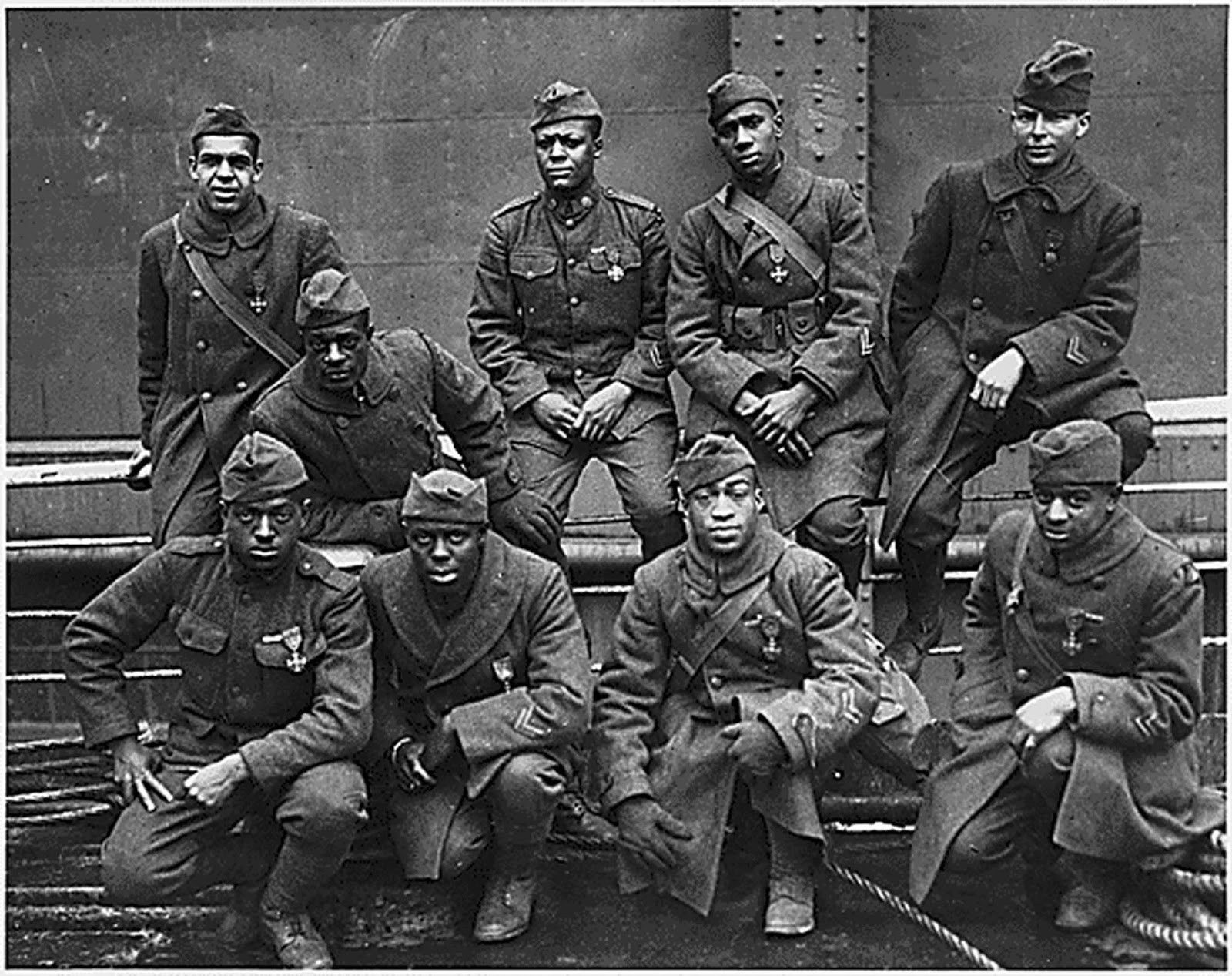
100 hundred years ago the
world witnessed a war so horrific, so widespread that they called it “the
War to end all wars” or simply the Great War. With the anniversary of the United States
participation in World War 1 coming up next year I would encourage you all to
visit a museum explaining the war and America’s part in it.
9th Machine Gun Battalion
Most Americans were opposed to entering the
European war, so much so that Woodrow Wilson won his second term in office
under the idea that “the president kept us out of war.”[3] January 19, 1917 the
British presented America a telegram that had been sent from Germany to Mexico
proposing an alliance.Between this
revelation and the unrestricted submarine warfare conducted by Germany against
all shipping between America and Britain, the pacifism was turning to a demand
for war. On February 3rd, the American grain ship, Housatonic, was sunk and three weeks
later a British liner was sunk killing four Americans. Two months later on April
6th the United States declared war on Germany. [2]
369th Infantry
4,000,000 military
personnel mobilized during WW1.The
Argonne-Meuse Offensive, starting on September 26, 1918 was the largest battle
that US troops participated in during the war. [1] Approximately 1.2 million
American troops fought from September to November by the end 26, 277 American
soldiers had died in the battle. [2]
On October 4th Wilson received a message
from Germany to conduct peace talks according to his 14 points.The war ended on November 11, 1918. [2]
The list provided is just a small sampling of museums
around the country. Take a road trip to one of these or find one closer to you.
WW1 should not be forgotten. Find a Museum or exhibit that honors the sacrifice
of the 50,000 men killed and an additional 230,000 wounded. [2]
[1] Paul S. Boyer, Clifford E. Clark, Jr., Joseph F.
Kett Neal Salisbury, Harvard Sitkoff, Nancy Woloch, Enduring Vision: A History of the American People Sixth ed. (Boston,
MA: Houghton Mifflin Company, 2009), 700-701.
[2] H.P. Willmott, World
War I (New York: DK Publishing, 2009), 196, 264-265, 307.
[3] A. Scott Berg, Wilson
(New York: G. P. Putnam’s Sons, 2013), 410-411.
I confess I had not paid
much attention to the purchase of Alaska in my studies until I read Sitka.Sitka is a fine historical fiction from Louis L’Amour about a young
American man who smuggles furs from Alaska to San Francisco while it was still
part of the Russian Empire. I was so foggy on the facts about this episode in
American history that Mr. L’Amour could have put anything he wanted in his book
and I would not have noticed the historical inaccuracies.That is the dark side of historical
fiction.However the benefit of books
like this is that it can make students curious.
I ended up looking up not only when did Alaska get
purchased by the United States but also it made me curious about other Russian
colonies in the Americas.I also had to look up what a Porter Percussion
Turret Rifle was. It was an early
repeating rifle design that used a revolving wheel to store the bullets. This
proved to be a poor design because one chamber would always be pointed at the
shooter and if something set that cartridge off it could kill you. It proved to
be not a very popular weapon, go figure). [1] This is the benefit of historical
fiction, it gets the student curious to look up some of these details, to see
what really happened. And it reminds old students like me, there is always
something else to look at in history.
Image 2
I sometimes get pretty
uppity about how much I know about American history, and then I talk to some of
my friends or read a book (like this one) and I just want to cry, “WHAT HAVE I
BEEN DOING WITH MY LIFE!”This book made me curious about Russian America
or Alaska during the mid-19th century which is what a historical fiction is
supposed to do. It was a good adventure and a good reminder of why I love
history so much.
I just visited Thomas Jefferson’s
retreat home, Poplar Forest. This is not the first time I have visited this
historical site, I took my future wife there for one of our first dates. I have
deep fondness for this location. Furthermore it has some fantastic exhibits to
offer despite its relative small appearance.When you drive up to the home you are greeted by a group of buildings there
is the house itself, smaller than Monticello, but exhibiting similar Jeffersonian
characteristics. There is the admissions and gift shop, a small classroom,
where tours gather to go to the house. Finally the archeology exhibit,
displaying artifacts found from digs on the property.Three things the museum does very well are the
house tour, the enslavement community tour, and its winter program called Winter
Reflections Weekends.
I have gone through many
presidential house tours but Poplar Forest is the most fun I have ever had in a
president’s house.This partly because
of the shape of the house, Poplar Forest is an octagon. No other building quite
captures Jefferson’s genius for architecture than Poplar Forest.You enter into the front door and going
through the entire house.The most
unique quality of the house is that it is not finished.Historians and master builders are attempting
to restore the house using the plans and tools of Jefferson’s era and in some
cases using wood from the property itself.After seeing the beautiful semi-finished product in the first half of
the house, you are escorted into the second half.The second half has been left to mostly
unrestored for educational purposes and this is the most interesting part of
the tour. You get to see behind the plaster and discover some of the building
practices of the early 19th century.
Image 2: jeffersonia.wordpress.com
The second program at Poplar
Forest that I enjoyed greatly was the Enslavement Community Tour. A tour that
explores the lives of the enslaved peoples that lived and worked on Poplar
Forest. This is not a unique program, similar tours are offered at Monticello, Montpellier
and Mt. Vernon. I confess this was the first Enslavement Community Tour I have
ever gone on, but from my limited experience Poplar Forest does a good job of introducing
the guests to the lives of these enslaved people. One could tell that the
museum had done a great deal of research providing their guests with names of
these people and not merely saying “there would have been a cook here and a
stable boy there.” The tour shows their
guests locations that the slaves would have worked and artifacts that the slaves
would have used.Poplar Forest does not
shy away from the controversial nature of slavery and that one of Virginia’s
most famous figures practiced it, instead they welcome the discussion, an important
attitude to have for any historian and historical site. The Enslavement Community
Tour is new to Poplar Forest only being developed last spring, but it is well conceived.
The last program to
mention in this blog is their Winter Weekends. Poplar Forest is closed for the
winter except on the weekends.As
opposed to the regular tours of the house where a docent walks the group
through each room of the house, Winter Weekends offers a semi-self-guided experience.There are two docents in the house to answer
questions but the guest may browse the many plaques and exhibits. One of the
best things about this program is the hands on experience this program offers.
In the parlor the southernmost room of the house one can lounge in a Campeachy
chair or play a game of chess. My day was made when I was able to dawn a pair
of white gloves and actually touch some two hundred year old books.
Poplar Forest is one of
my favorite historical sites not only because of my personal experiences but
because of the many opportunities for historical discovery. I would recommend
it to schools as a great location for a field trip or for a young family to
spend a day trip in winter or summer.