Friday, July 17, 2015

Here we go again!


Since graduating I have been wanting to do a post about the benefits of internships. When I was in school I heard multiple times from instructors that I should pursue an internship opportunity.  I did not follow their sage advise, there was always something else to do or some other responsibility. After graduating with a bachelors in history and not investing the time to seek out an internship I would like to encourage all history students out there to get an internship.  As the philosopher George Santayana said "Those who cannot remember the past are condemned to repeat it." Alright, that may a trite quote for a history blog however I would like others to learn from my mistake. I didn’t pay much attention to my short coming till after I graduated and by then it was too late.  Searching for a job definitely made me realize the necessity for history students to get internships or at least volunteer. It was volunteering at the National Civil War Chaplain’s Museum that helped me land a job at The Woodrow Wilson Presidential Library. Museums often have limited funds to hire employees, so they use volunteers and when a position does open up they typically hire from within a pool of candidates that they are familiar with i.e. those volunteers or those interns. Needless to say I was very blessed to receive a job in my field with the experience of an internship. Internships, even unpaid internships, are doorways into jobs.  This is especially true for workers in the history field.


I am also happy to announce my acceptance into the Public History program at James Madison University.  I am trying to prepare myself for a very busy year ahead of me.  I will be taking three classes (full time) participating in a teacher’s assistantship and continuing to work at the Woodrow Wilson Presidential Library on the weekends.  I am hoping a master’s in Public History will make me more desirable to employers in my field.  Here we go again!

Tuesday, May 19, 2015

Batman Around the World


My last post announced my interest in studying comic book history and a piece of my paper on Batman during the Second World War.  In this post I would like to explore some of the ways other cultures portrayed the Dynamic Duo. 

As America entered World War II, Batman became a national figure.  He chased villains across state lines, combated crime in all regions of the country. [1] As Batman gained popularity in America he gained international popularity as well.  In the 1948, some young Spaniards essentially copied the American Batman comics and sold them as their own.  This did not last too long as these entrepreneurs began putting their own spin on Batman and Robin.  First, they made by Robin the main character and changing his tunic from red to yellow.  The also had Robin and Murcielago (Bat) use guns and grenades against their foes. [3] [4]

Of all the places mentioned in this blog, The Philippines probably has the most to offer.  At least seven Batman related films have come from this country and they are worth looking into.  The earliest was made in 1965 called Alyas Batman at Robin and bewilderingly the latest was called Alyas Batman en Robin made in 1991.  However, my favorite is James Batman, where James Bond and Batman and Robin team up to take down an evil syndicate bent on world domination. [5-9]

Batman the television series brought a campy portrayal of the Caped Crusader in 1966 but by 1968 the show was wrapping up.  Apparently not so in Mexico, as another Caped Crusader defended the beaches of Mexico, in a Bikini?  Yes! A movie was made about a Bat-woman who saved the day wearing a cowl, cape and a two piece bathing suit.


There was a Turkish film made in 1973,Yarasa Adam: Bedman. This version is more than a little different than the American rendition.  In this version Batman smokes, uses a gun and, visits strip clubs. [2] The film itself has several moments of nudity as may be spotted in the film poster.  I had to double check to make sure this was not a porn parody. I am pretty certain it is not but then again….


The most famous and probably the most main stream international version of Batman comes from Manga legend Jiro Kuwata.  During the mid-1960s DC comics commissioned Kuwata to produce a Manga based on Batman for Japanese audiences.
BatManga


These are only a few of the incarnations of Batman around the world.  They only made me like Batman all the more.

 
Swedish Batman Comic from the 80s

   1.      Christopher Keating, Batman’s Role in the Second World War: Defending the  Home Front, (2015): 8. 


      3.      http://comicsalliance.com/spains-bootleg-robin-was-a-gun-toting-badass/


Saturday, April 25, 2015

Batman! Studying Comic Books

I'm Batman! (or not.)
I have finished my senior cap class paper.  It was the most fun I have ever had writing a paper in my entire collegiate career.  Two areas of research that I was looking through was comic book history itself and research on the life in America during World War II.  The academic community researching comic book related topics is quite small, however, it appears to be growing.  It made me realize how much I enjoy reading comics and telling the story behind the story.  I would love to continue to study Batman and comics as I continue to learn how to study and tell history.  Here is a segment of my paper to show you what I have been working on.

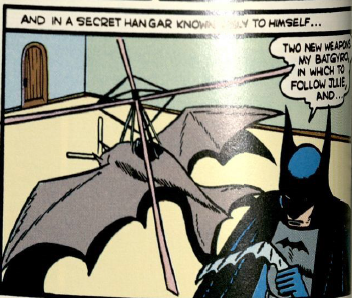
The earliest stories drew from pulp magazines, monster movies and gangster movies of the time.[1]  Batman was a dark character as he battled vampires, werewolves, mad scientists, and of course gangsters.  Batman was so dark at the time that one editor defined the comic book as “scary.”[2]  Kane remembered, “In the first year, Batman had been a grim vigilante who operated outside the law.”[3]  Batman had even used guns in these early issues, the first time was in Detective Comic #32 where he used silver bullets to kill a couple of vampires.[4]  The most notorious act of gun violence was in Batman #1 where Batman battles two monstrous giants.  While chasing the monsters in his Bat-plane, Batman says, “Much as I hate to take human life, I’m afraid this time it’s necessary!”[5]  Batman uses his Bat-plane’s machine gun to stop the truck the giant was in and then proceeded to hang the giant with a noose hanging from the plane.  After cutting the limp giant from his plane, Batman kills a second giant by shooting him off a building.[6]  Finger and Kane both got in trouble from the editor for these overtly violent images. Kane would later say, “We didn’t think anything was wrong with Batman carrying a gun because the Shadow used one.”[7]  Comics were coming under some attacks for their use of violence.  Kane further states “this story resulted in DC preparing its own comics code…. It forbade any whippings, hangings, knifings, or sexual references” and Batman was not allowed to use a gun.[8]  To alleviate fears DC Comics told parents that their comics were endorsed by psychologist, educational professionals, and literature professors.[9]  DC Comics was hoping that this would quiet the critics and make parents choose their product over the competition.
DC Comics began marketing to parents, by making comic books more family friendly.[10]  DC was afraid parents would not let their children buy comics where people were shot and killed.[11]  Even before the gun controversy, Kane added a new character, Dick Grayson, a young orphaned acrobat who became Bruce Wayne’s charge.  This character was of course known as Robin, the Boy Wonder and side kick to Batman.  This made for a lighter atmosphere where both characters spewed puns as well as punches when dispatching villainous criminals.  To help lighten the feel of the comic Kane “began drawing the cowl higher up so that his face showed more, and had him smile and look less grim. I also shortened his ears, which…made him look somewhat satanic.”[12]  With the addition of Robin in Detective Comics #38 and Batman’s lighter appearance, the comic sold almost double than it had with Batman by himself.[13]

I hope you enjoyed this piece of my paper.  I am looking for a way to make the entire paper available.  So, you can read the whole thing if you want.


Looking studious

[1] Wright, Comic Book Nation, 17.
[2] Mark Cotta Vaz, Tales of the Dark Knight: Batman’s First Fifty Years: 1939-1989 (New York: Ballentine Books, 1989), 31.
[3] Kane, and Tom Andrae. Batman & Me, 45.
[4] Dale Crain et. al. eds. The Batman Chronicles. Vol. 1. (New York: DC Comics, 2005), 160.
[5] Ibid., 161.
[6] Ibid., 164.
[7] Kane, and Tom Andrae. Batman & Me, 45.
[8] Ibid., 46.
[9] Jill Lepore, The Secret History of Wonder Woman. (New York: Alfred A. Knopf, 2014), 186.
[10] Gabilliet, Of Comics and Men, 23.
[11] Kane, and Tom Andrae. Batman & Me, 45.
[12] Ibid., 47.
[13] Ibid., 46.

Tuesday, March 17, 2015

My Trip to VCU and Gothom

Me at VCU
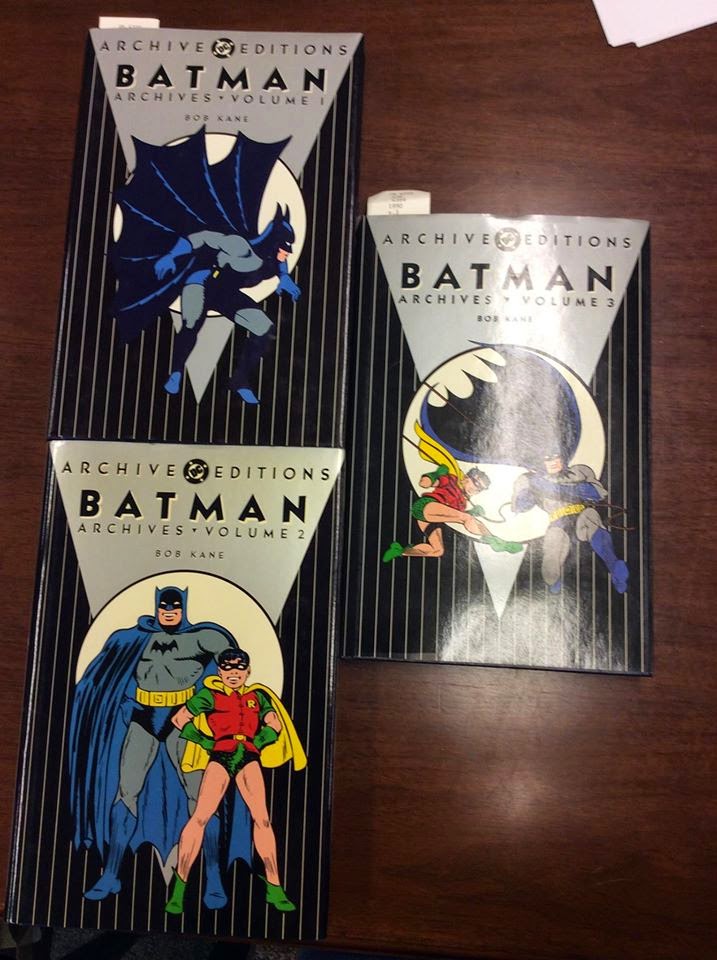
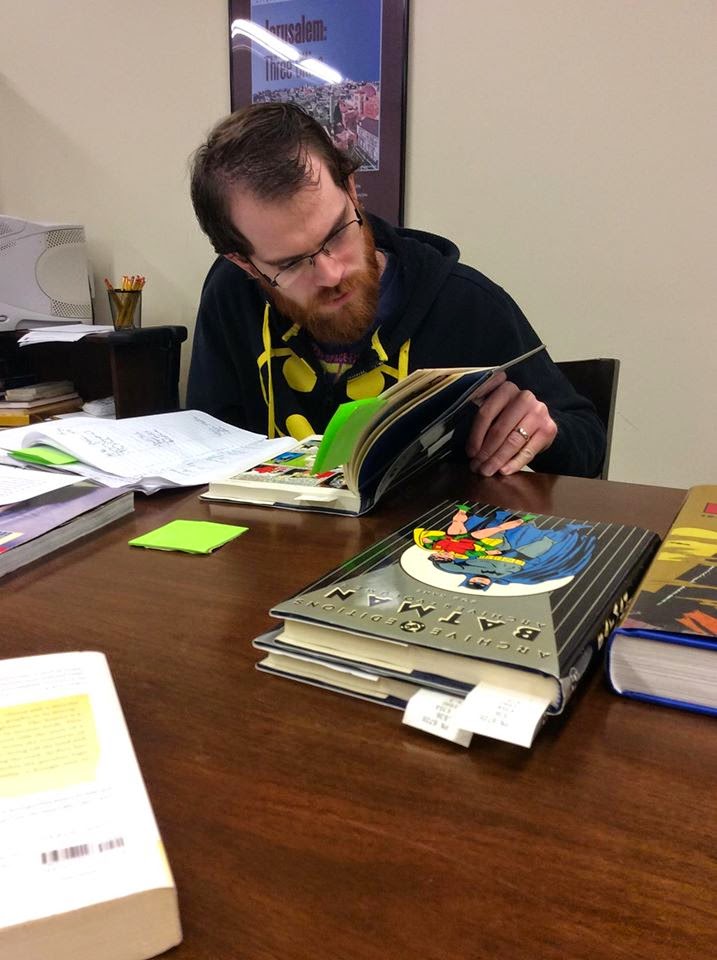
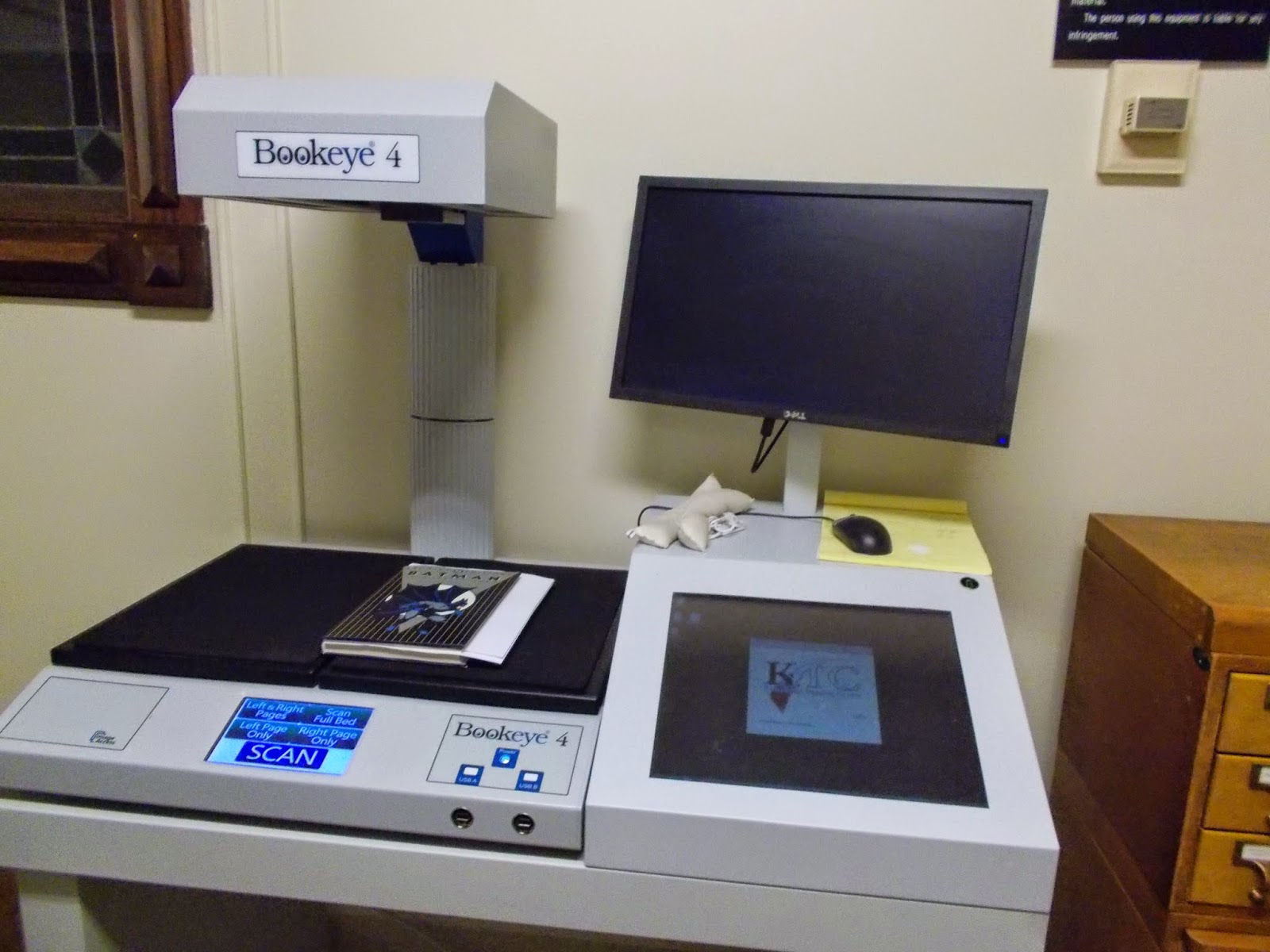
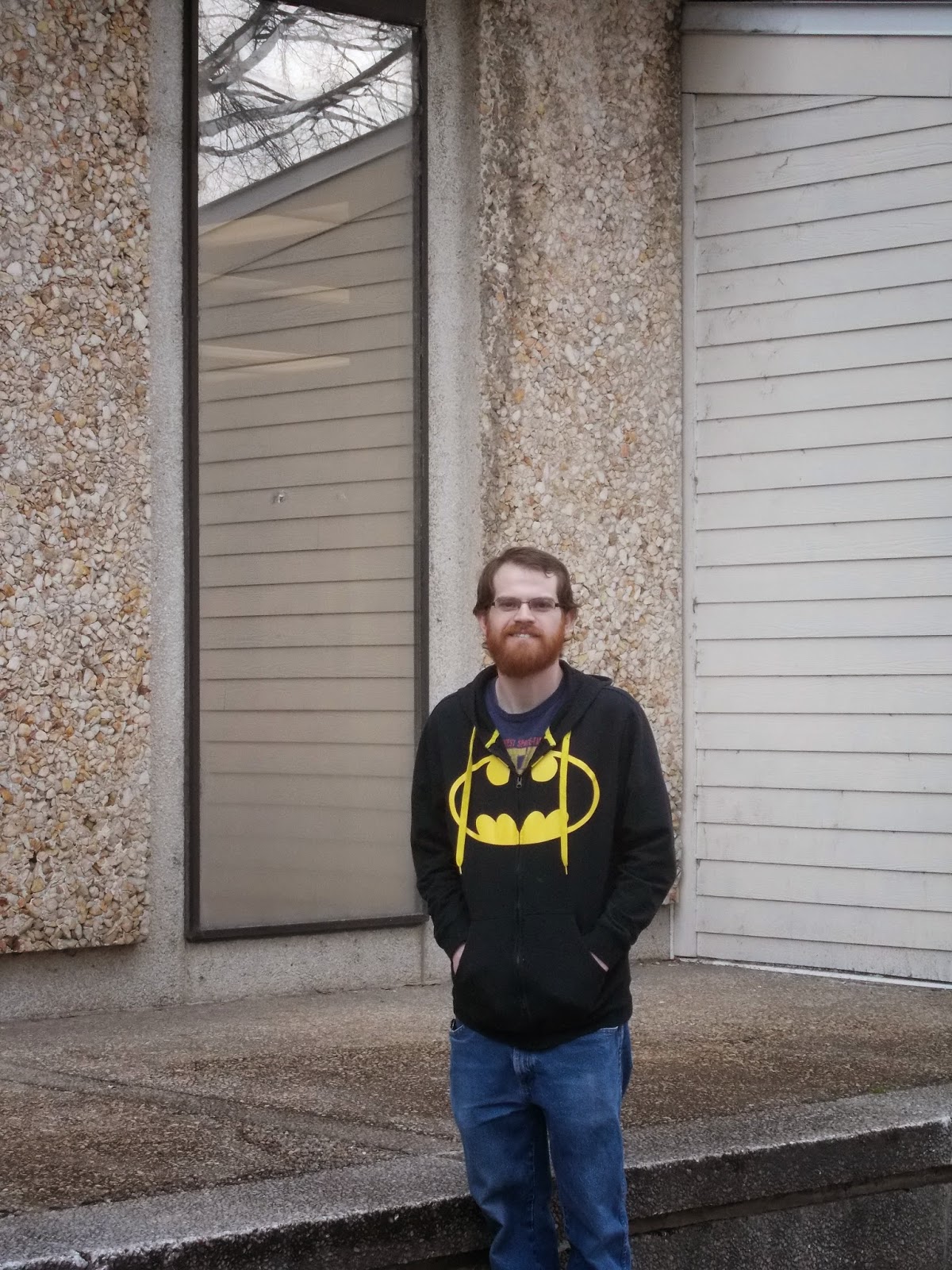
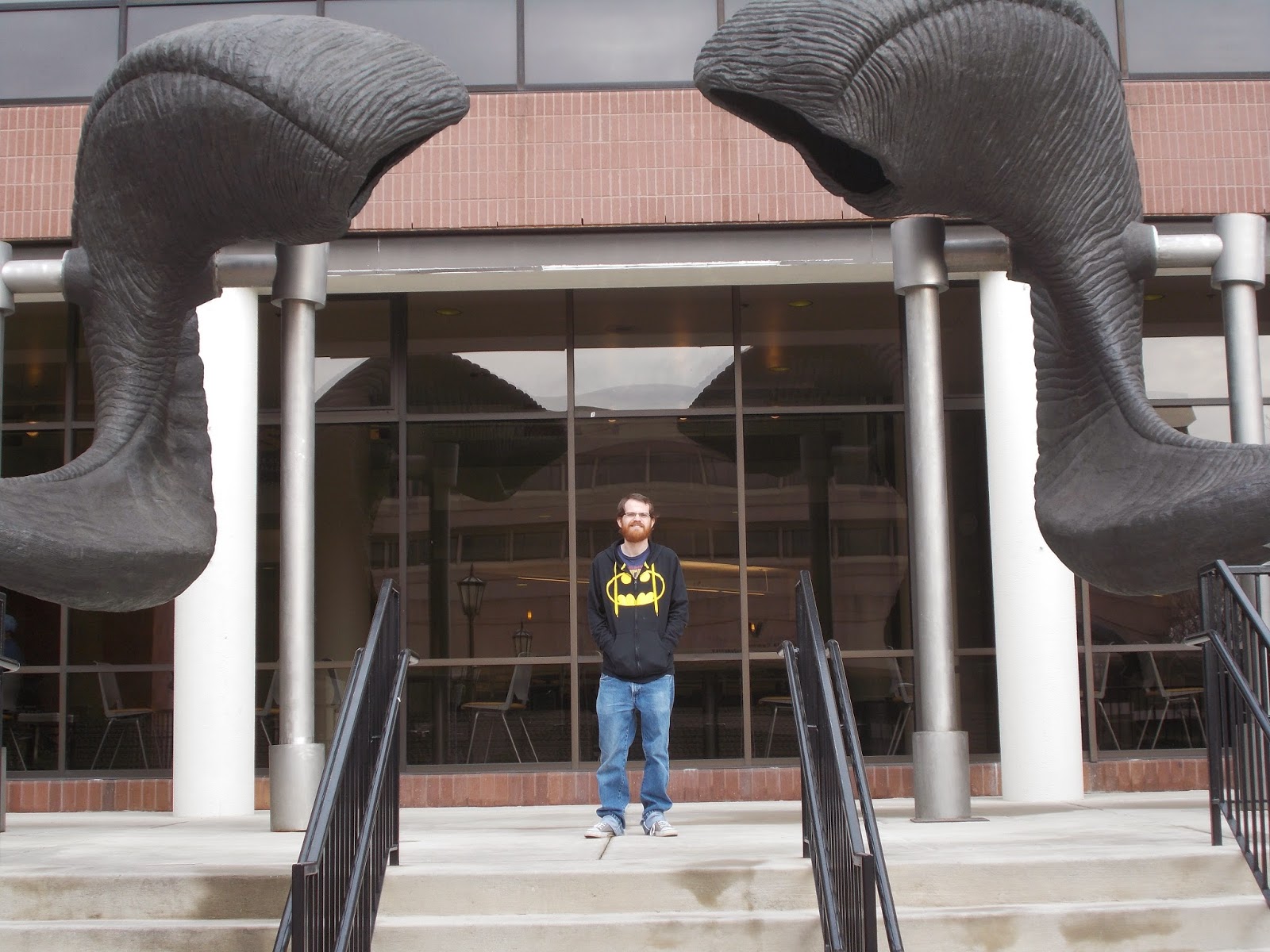
I wrote last time about how I am working on my “batman paper,” to help in this endeavor I recently visited Virginia Commonwealth University (VCU) in Richmond, Virginia.  They are home to a large comic book collection and it is open to the public.  Their staff was super helpful with helping me find sources for my paper.  Unfortunately the archive was under some construction so I did not get to see their display cases but I was allowed to use this really cool scanner that I could send pictures of Batman to my email for future study. 


Batman's first Batmobile
"Sources!"


The Bat-gyro and Bat-arang


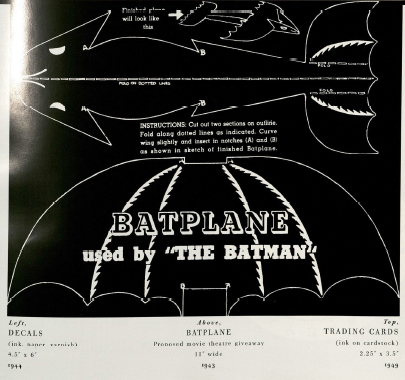
Batman Marketing
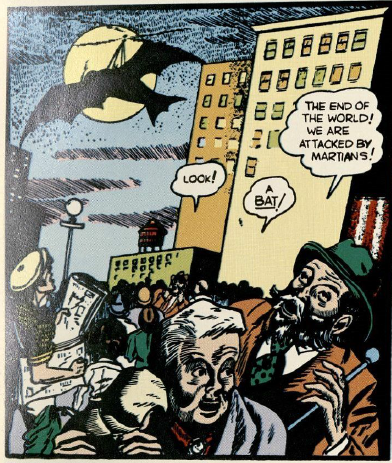
"Is it a bird?"

Hard at work
The Scanner


The Reading room


Me in front of the Library
Photo op!


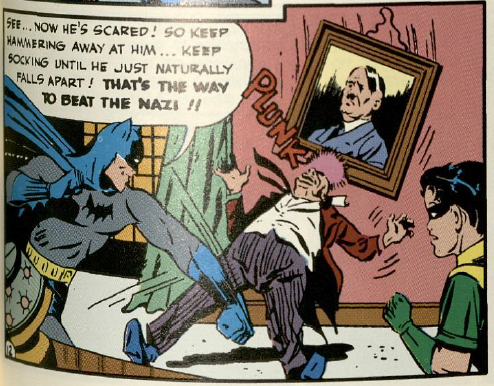
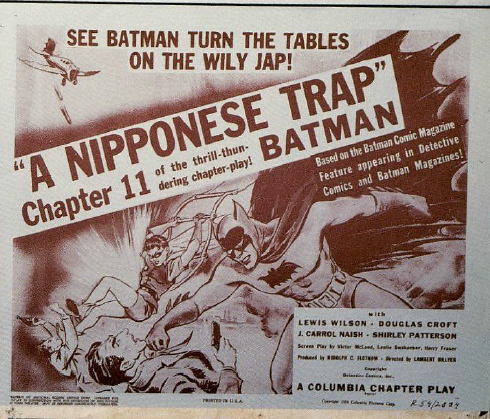
Fighting Nazis


Batman in World War II


I am still researching for my paper but I believe I am closer to a thesis.  I would like to focus in on Batman’s impact on American culture during the Second World War.  This was a time where a lot of popular culture and media were used to support the war effort, advertising for war bonds and stamps.  Batman, like other superheroes and detectives in comic books and movies of the era would remind readers the importance for buying war stamps and being a “good American.”  I look forward to delving deeper into my topic and possibly returning to VCU for more research. 

Sunday, March 1, 2015

My Next Project...BATMAN!

Batman and me
I am announcing my “big project” for the spring.  I am writing a short paper on Batman.  I have been a fan since I knew what super heroes were.  I will be visiting Virginia Commonwealth University (http://www.library.vcu.edu/research/special-collections/cabell/comics/) to do research in their comic book archive and reading a lot of comic books.  I will post more as the project progresses.  Who says history can’t be fun?

Sunday, February 15, 2015

Freedom to Tell the Truth

Mr. Jefferson and I

A historian is to tell the truth, as unbiased as he can.  I was asked to give a statement of my philosophy of history, to do so I must first explain my worldview.  Simply put, a worldview is a framework by which one sees the world.  The way I understand a worldview is that is a group of answers to questions everyone asks.  The first is “where do we (mankind) come from?”  The second is, “why are we in existence?” [1]

I follow what is called the Biblical worldview.  I answer the first question, “God created us.”  “In the beginning God created the heavens and the earth.”[2]  This answer assumes two points, first God is real and second the Bible is true.  With the first question answered I can surmise that if God created me he did so with a purpose.  This realization allows me another assumption; He is powerful enough to make His will happen past creation. 

This being said a Biblical worldview makes me a more unbiased historian by doing two things.  First, it allows me to keep God in His place as the mover of history.  I don’t have to make flawed men such as Andrew Jackson, or Abraham Lincoln, gods in an American pantheon.  Second, because the Bible offers an Absolute moral code I can study men and let their own actions speak for themselves.   In the case of Adolph Hitler, my job is to study his actions, as the leader of Germany and of the Nazi party.  In terms of good and evil, his actions are compared to God’s law not my own opinions of right and wrong.  


Presidents Jackson and Lincoln
The Biblical Worldview frees me from creating heroes and villains from history.  It allows me to do what historians are meant to do, tell the truth.

1. Chuck Colson and Nancy Pearcy, How Now Shall We Live (Tyndale House Publishers INC., 2004), 14.

2. Genesis 1:1

Wednesday, February 11, 2015

The Title Change


       I have recently changed the name of my blog.  It started when I told my father that I was required to write a blog for my class this semester and planned to write more often to practice and get better in my writing skills.  He liked the idea and asked me what I had named my blog?  I answered “It’s called The Historian.”  He humphed and nodded.  I asked “you don’t like it?” He answered frankly “no.”  He explained that it should have more umph.  “You should call it Keating’s Kronicle!” he exclaimed helpfully.  I told him I would think about it.  I did think about it but it wasn’t until the first blog assignment when I got to look at my classmate’s blogs, when I saw that someone had the same name I had.  Not only that but most of their names had history somewhere in their titles.  This is when I decided my Dad was right I needed a name more unique.  So I changed it to The Weaving Chronicle.  To be honest, I am not sure how original of a name it is but the reason I chose it and like it is because the name depicts the story above.  Chronicle is a description of events in the order of which they happened (according to the Merriam-Webster online dictionary).  One may ask “isn’t that history?”  No, history is not as Dr. Sam Smith says, a “direct chronicle.”  It is also a narrative, a story told by the observer.  There is a human element to history.  Hence, why I named my blog the “Weaving Chronicle.”  Weaving or to weave means to interlace or intertwine in order to make something else like cloth or a basket.  My intention with this blog is to take the facts and weave them into a history.